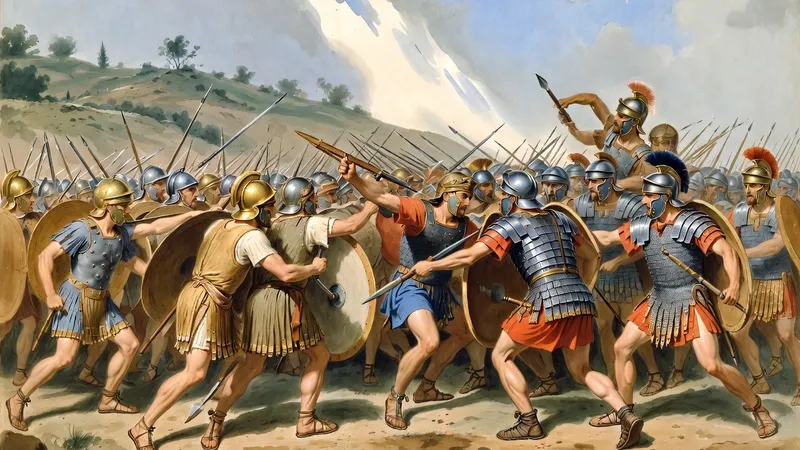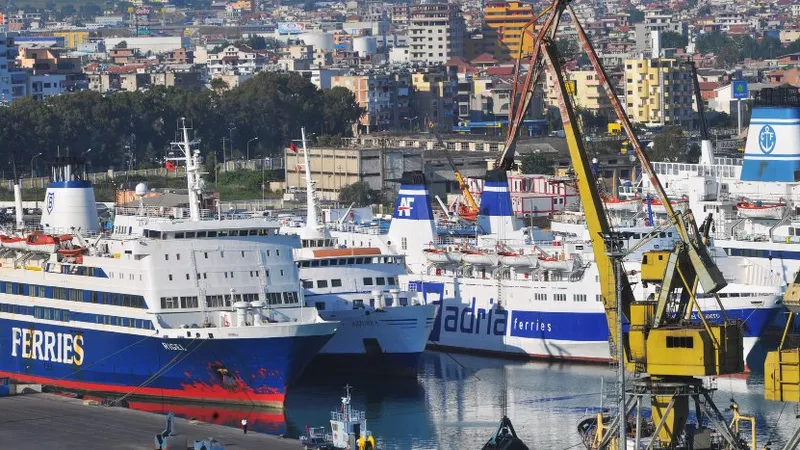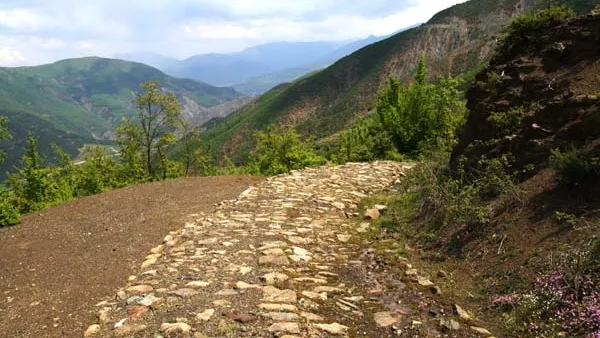

Via Egnatia is the Roman name for the ancient East-West connection in the Southern Balkans from the Adriatic coast to the Bosporus. It was named after the Roman consul Gnaius Egnatius, who had the road paved for military purposes around 146 BC. The Romans also built castles at one day’s march intervals to accommodate the soldiers. Over time, these castles evolved into cities that still exist today. The Albanian city of Elbasan stands out as a good example, because the old centre still shows the walled square outline of the original Roman castellum.
The Via Egnatia remained a vital trade artery and cultural corridor during the Roman, Byzantine, Ottoman empires and Tsar Samuel’s Empire. The route has seen history from ancient Illyria and Hellas up to the nationalistic wars of the early 2000s, when the corridor was broken into pieces, and the people became disconnected.
Fragmented, a lot hidden under modern asphalt, gravel, covered by layers of soil and shrubs, some of it destroyed, but the Via Egnatia is still there, waiting to be revived as a Way to Connect.
The Foundation
Travelling in Albania, the Dutch founders of the VEF, Marietta van Attekum and Holger de Bruin, stumbled upon the Via Egnatia by chance, after being told they could walk all the way to Lake Ohrid. After Albania’s long isolation, they saw how the road’s heritage could bear witness to the shared history of the region. They got inspired and launched the Via Egnatia Project in 2009 with a Kick-off Conference near Bitola with the help of the Dutch embassy in Skopje.
They invited historians, archaeologists, anthropologists and musicians from all Via Egnatia countries. But oddly, though they were all Via Egnatia experts, none of them had ever met before, knew each other by name, or knew each other’s work at all.
If even scholars were so utterly disconnected, how about everybody else in the region?
Marietta and Holger felt really compelled to address this striking lack of transnational connection, and so the idea of the Via Egnatia as a Way to Connect was born.
The Via Egnatia project
The Via Egnatia project is multidimensional, not only to create awareness of the importance of the tangible heritage and its protection, but especially of the intangible side of the road: the millennia of shared history that connect the countries of today in the region. The Via Egnatia Foundation has been committed to that mission ever since 2009, addressing slow tourism, children along the Via Egnatia, scholars, women, and secondary school education.
Walking the Via
From 2009 to 2011, they walked with international groups from Durrës to Istanbul, accompanied by horses, donkeys, and mules to raise awareness locally, having a great time enjoying the hospitality of the people, the music and dancing, the monuments and amazing cities. News of the Project spread by word of mouth and through interviews with local and national media. The journeys got a lot of attention— they even made the 8 o’clock news in North Macedonia on 2 occasions. The fourth journey was with a group of tourism students from Elbasan.
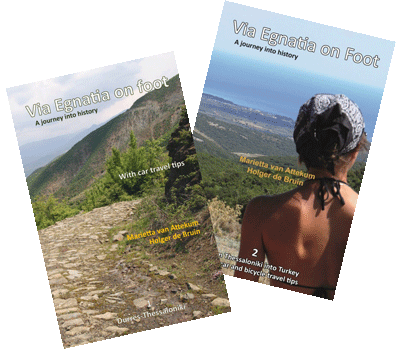
From these experiences came the idea of creating a Via Egnatia Hiking Trail to reinstate the route as the continuous corridor it had been for thousands of years. Marietta and Holger wrote two comprehensive guidebooks with a lot of information on history and local languages. The route runs from Durrës to Edirne, in Turkey, where it connects to the Sultans Trail.
The trail gains more traction yearly, although the annual number of walkers still has to be counted in the hundreds, partially due to the paucity of overnight accommodation, a situation that’s gradually improving, filling up the existing gaps and allowing for a gradual rise in the number of walkers. The first guidebook had its 4th edition in 2024.
Children
On three of the Caravan Journeys, children all along the VE painted on a 40-meter-long canvas in town squares to generate as much exposure as possible.
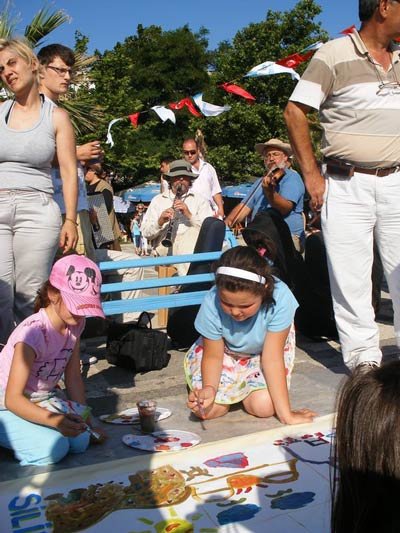
A traveling band played the songs and melodies universally known across the region. Smaller copies of the whole painting were then given to schools along the Via Egnatia, helping hundreds of children to become aware of this way that connects them with all children along the Via Egnatia from Durrës to Istanbul.
Science
Two conferences also generated results: Two books, one about migration in the Southern Balkans by anthropologists. The second is Myths of the Other about historical bias, national myths and prejudice in the Balkans. You can download both books for free via our website.
Via Egnatia cuisine
The VEF organized cooking events for local women who brought their favorite traditional dishes and shared the recipes. A Turkish TV cook gathered the recipes at these events. Many recipes turned out to be local or personal variants of universal Via Egnatia dishes. Cuisine as yet another way to connect
The Caravan Via Egnatia board game
Because children are the future, the VEF also dived into school education:
In cooperation with the Macedonian Civic Education Centre, Dutch and Macedonian schools and with the help of Erasmus+ funding, it developed and produced a board game for secondary school classes:
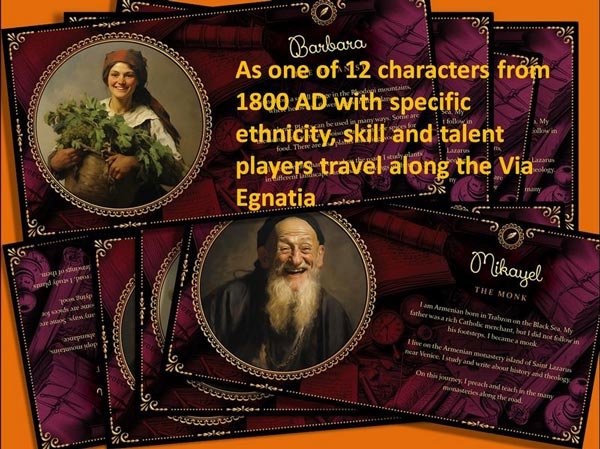
Caravan Via Egnatia is a rich and engaging board game depicting traveling the Via Egnatia around 1800 AD. It combines geography, history, and civic education in a single experience.
Playing the game, one develops problem-solving, collaboration, and individual and collective decision-making skills.
Each player identifies him/herself with a different character from around 1800, reflecting the multi-ethnicity of the Ottoman Empire. Special cards allow teachers to prompt class discussions on a variety of topics, including cultural understanding and historical perspectives. School classes in North Macedonia and the Netherlands tested the prototypes. Which was really great fun. The students commented on the game, and VEF improved the game until everybody was satisfied. The game is now used by schools in North Macedonia, Albania, and the Netherlands.
The Via Egnatia Foundation received the European Innovative Teaching Award 2025 for the Caravan Via Egnatia board game.
The Future
Updating and improving the hiking trail as a sustainable slow tourism project remains part of the work, but the main focus will be on connecting people, raising awareness, and promoting sharing of knowledge, experiences and culture.
The Via Egnatia Foundation still has a lot of ideas to revive the Via Egnatia as a real WAY to CONNECT!
And whoever wants to help, contribute or join is welcome to contact the VEF via https://viaegnatiafoundation.eu/